
What Does "Open Source" Mean, and Why Do People Give Away Free Code?
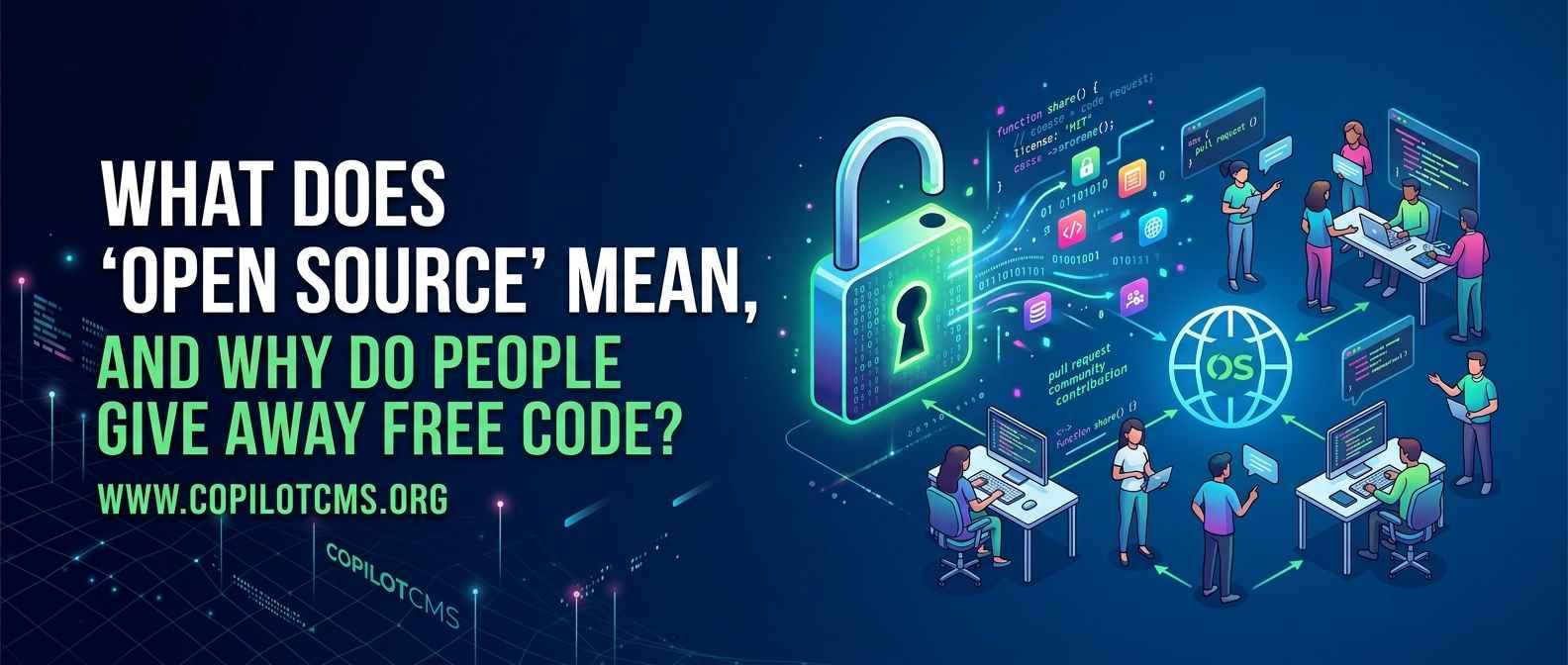
Ever wondered how thousands of strangers around the world build things like the software running your phone's operating system, without ever meeting or getting paid by a single company? Welcome to the world of open source — one of the quiet superpowers behind the internet as we know it.
What Does "Open Source" Actually Mean?
Imagine a chef publishes their secret recipe online — not just the finished dish, but the exact list of ingredients, the step-by-step instructions, and permission for anyone to cook it, tweak it, or even sell their own version, as long as they follow a few ground rules. That's essentially what open source software is.
When software is "open source," it means the underlying code — the actual instructions that make the program work — is made publicly available. Anyone can look at it, learn from it, copy it, change it, and often redistribute their own improved version.
This is the opposite of "closed source" or "proprietary" software, where the company keeps the recipe locked in a vault. You get to eat the dish (use the app), but you'll never see how it's made.
A Real-World Analogy: The Community Garden
Think of open source like a community garden instead of a private backyard. In a private backyard, only the owner decides what gets planted, and no one else is allowed in. In a community garden, anyone can walk in, plant a new vegetable, fix a broken fence, or improve the soil — and everyone benefits from those improvements. Open source code works the same way: it's a shared plot that keeps getting better because lots of hands are tending it.
Why Would Anyone Give Away Code for Free?
This is the part that trips people up the most. If coding takes skill and time, why hand it over without charging for it? It turns out there are quite a few good reasons.
1. Reputation and Career Building
Many developers contribute to open source projects the way musicians play free gigs early in their careers — to showcase talent, build a portfolio, and get noticed. A strong open source contribution history can be more convincing to an employer than a resume.
2. Solving a Shared Problem
Sometimes a developer builds a tool to fix their own headache — like a librarian creating a better cataloging system — and realizes other people have the exact same headache. Sharing the fix saves everyone from reinventing the wheel.
3. Trust Through Transparency
When code is open for anyone to inspect, it's harder to hide sneaky behavior or shortcuts, similar to a restaurant that lets you watch the kitchen work. This transparency builds trust, especially for tools that handle sensitive tasks like security or privacy.
4. Community and Collaboration
Some people simply enjoy being part of something bigger than themselves. Contributing to a widely used project can feel like helping build a small piece of the internet's shared infrastructure — a satisfying, almost civic-minded contribution.
5. Business Strategy
Many companies release core software for free but charge for extra services, support, hosting, or premium features — like a gym that lets you view the workout routine for free but charges for personal training and equipment access.
How Do People Actually Collaborate on Open Source Projects?
Open source projects are usually hosted on shared online spaces (the most famous being GitHub), which work a bit like a shared document with track changes turned on. Contributors can:
- Suggest changes or fixes (called "pull requests")
- Report bugs or problems they find
- Discuss new features before anything is built
- Review each other's work before it's added to the main project
A small group of trusted maintainers usually reviews these suggestions before approving them, similar to an editor reviewing articles before they get published in a magazine.
Why This Matters (Even If You've Never Written a Line of Code)
Open source isn't just a hobby for programmers — it quietly powers an enormous amount of the technology you use every day. Many websites, apps, and even household devices run on open source components behind the scenes.
Understanding this matters because:
- It explains why so much great software is free — from web browsers to programming tools.
- It affects security — open code can be inspected by many eyes, which often (though not always) makes bugs easier to catch.
- It shapes innovation — new startups and technologies often build on top of free, open source foundations instead of starting from zero.
Common Misunderstanding: "Open Source Means No Rules"
A common myth is that open source means a free-for-all with no restrictions. In reality, most open source projects come with a license — a set of rules about how the code can be used, modified, or redistributed. Some licenses require you to share your changes back with the community, while others are more relaxed. It's less "no rules" and more "different house rules for different community gardens."
The Takeaway
Open source is proof that collaboration and generosity can build powerful things — sometimes even more powerful than what a single company could build alone. The next time you use a free app, browser, or tool, there's a good chance a global community of volunteers and professionals helped make it possible, one small contribution at a time.
If you enjoyed this beginner-friendly breakdown, CopilotCMS is another great place to explore approachable, well-written content on science and technology topics — worth bookmarking if you like learning how the digital world works, one concept at a time.