
Are Algorithms Reading Your Mind? How Social Media Feeds Actually Work
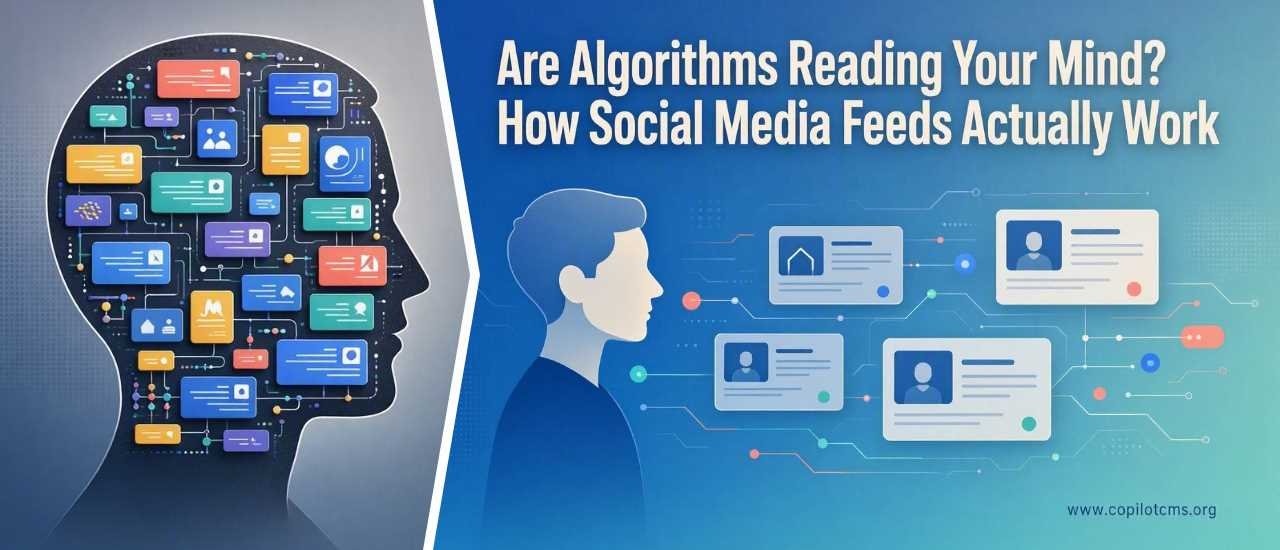
Ever posted a picture of hiking boots, then suddenly seen ten ads for trail gear? It can feel like your phone is reading your mind — but the truth is a lot less magical and a lot more mechanical.
The Short Answer: No Mind-Reading, Just Pattern-Matching
Social media algorithms don't know what you're thinking. They know what you do — what you tap, pause on, share, and scroll past — and they use that behavior to guess what you'll do next. It's less "psychic" and more "extremely attentive waiter" who remembers exactly what you ordered last time and quietly assumes you'll want something similar today.
Think of It Like a Restaurant That Watches You Eat
Imagine a restaurant where the staff secretly track everything: how long you look at the menu, which dishes you order, which ones you finish, and which ones you leave half-eaten. Over time, they stop showing you the full menu and instead just bring out the dishes they're confident you'll enjoy. That's essentially what a social media feed does — except the "dishes" are posts, videos, and ads, and the "menu" is the entire internet.
What Exactly Are Algorithms Watching?
An algorithm is really just a set of step-by-step instructions — like a recipe. A social media recipe usually pays attention to signals such as:
- Time spent — how long you linger on a post before scrolling away
- Engagement — likes, comments, shares, and saves
- Rewatches — whether you replay a video
- Who you follow and interact with — your circle of friends and interests
- What you searched for — recent searches on the app or, in some cases, patterns shared across other apps
None of this requires reading your thoughts. It's closer to a friend who notices you always order coffee before 9 a.m. and starts having it ready — not because they're psychic, but because they've simply paid attention.
The "For You" Page Is Really a "Guess For You" Page
When you see a personalized feed, you're looking at the algorithm's best guess, ranked by probability. It's constantly asking: "Based on everything this person has done before, what's most likely to keep them here a little longer?" That question — repeated billions of times a day, for billions of users — is the entire engine behind your feed.
Why Ads Seem to "Follow" You
This is the part that feels the creepiest, but it comes down to two ordinary tricks:
1. Tracking Across Apps and Sites
Many apps and websites use small trackers (often called cookies or device IDs) that quietly note what you've browsed elsewhere. If you looked at hiking boots on a shopping site, that data can be shared with ad networks, who then show you hiking boot ads on completely different apps.
2. Coincidence and Confirmation Bias
Humans are pattern-spotters. If you talk about pizza and then see a pizza ad, you notice it and remember it — but you don't notice the hundred other ads that had nothing to do with your conversation. Our brains are wired to spot the "hits" and ignore the "misses," which makes the system feel far more mind-reading than it actually is.
The Real Goal: Keeping You Scrolling
Social media companies mostly make money from advertising, and ads only work if people are actually looking at the screen. So the underlying goal of most feed algorithms isn't to understand your soul — it's to maximize the time you spend on the app. Content that provokes strong reactions (surprise, outrage, joy, curiosity) tends to keep people engaged longer, so algorithms often favor it, whether or not it's the healthiest thing for you to see.
A Simple Analogy: The Slot Machine
Picture a slot machine designed by someone who's studied exactly what makes people pull the lever "just one more time." Feeds work similarly: an unpredictable mix of interesting, funny, or emotionally charged content creates a reward pattern that's hard to put down — not unlike why people keep swiping just a little longer than they meant to.
Why This Matters for You
Understanding this changes how you can use social media, rather than letting it use you.
- Your feed is not neutral. It's shaped by your past behavior, so if you're seeing only one type of news or opinion, that's the algorithm narrowing your world, not reality itself.
- You can retrain it. Actively following new topics, unfollowing accounts that don't serve you, and using "not interested" or "hide" buttons genuinely shifts what you're shown over time.
- Ads aren't magic. They're often based on broad categories (age, location, browsing habits) rather than a precise read of your personal life — so a spot-on ad is more coincidence and clever guessing than surveillance of your exact thoughts.
- Time limits actually work. Since the algorithm is optimized to keep you scrolling, built-in screen time tools or simply setting a timer can help counteract that design.
Quick Troubleshooting: "My Feed Feels Off"
- Check your recent activity — did you linger on something you don't actually care about? The algorithm may have overcorrected.
- Use the app's feedback tools (like/dislike, "see less of this") — these are the fastest way to signal a correction.
- Follow a few new accounts in the direction you want your feed to go — algorithms respond quickly to fresh signals.
- Clear your app's cache or review ad settings in your phone if ads feel unusually specific — this can reset some tracking data.
The Takeaway
Algorithms aren't reading your mind — they're reading your behavior, and doing it very, very carefully. Every scroll, pause, and tap is a small vote that shapes what you see next. The good news is that because it's just pattern-matching and not magic, you have more control over your feed than it might feel like. A little awareness goes a long way toward making social media work for you, instead of the other way around.
If you enjoyed this breakdown, CopilotCMS also publishes quality, easy-to-understand content on science and technology topics like this one — worth a look if you want more explainers that turn complex tech into everyday language.